

The operating system for the digital workplace
Nanoheal finds the problem and fixes it on the device.
A boot that drags, a call that freezes, an app that keeps crashing. Haya, Nanoheal’s AI and analytics, shows what is behind it on each laptop and which fix to run. Your team approves it once; from then on it runs on its own, on every device it fits.
- 47.4Endpointthis device
- 66.6Publishedthe flat score
Current pressure
- Memory used
86% - CPU
68% - Disk free
47% - Network round trip
66 ms
Days degraded
23of the last 30
Memory is what drags this laptop
The platform, as a map
Four jobs Nanoheal does on every device, then the parts underneath that make them work.
DEX shows you the problem. Here, it also starts the fix.
You get everything on a DEX shortlist. What changes is what happens next. Scripts have to go looking for a problem. Nanoheal is told.
- Measurement across devices, applications, network and employee sentiment.
- A patented experience score you can open up and tune.
- Dashboards from the executive summary down to a single device.
- Anomaly detection and forecasting against each device’s own history.
When a problem matches a fix in the library, the approved fix runs on the device and the score shows whether it worked. Nothing is handed to another tool.
- FoundWi-Fi drops after sleep41 laptops · third floor · since Monday
- MatchedWi-Fi profile resetFrom the library · approved v2
- RanOn the 41 laptops39 succeeded · 2 retrying
- ScoredNetwork experience, third floor58 → 67 · same score profile
Four stages that hand work to each other.
Experience shows where work is getting harder, Intelligence explains why, Automate runs the fix, and Manage finds the next thing worth fixing. It all runs on one agent and one console.
Automate, in the product
The approved fix runs on the device where the problem appeared: by itself, offered to the employee or run by your service desk. The same agent also installs software, patches and keeps devices to policy.
Automate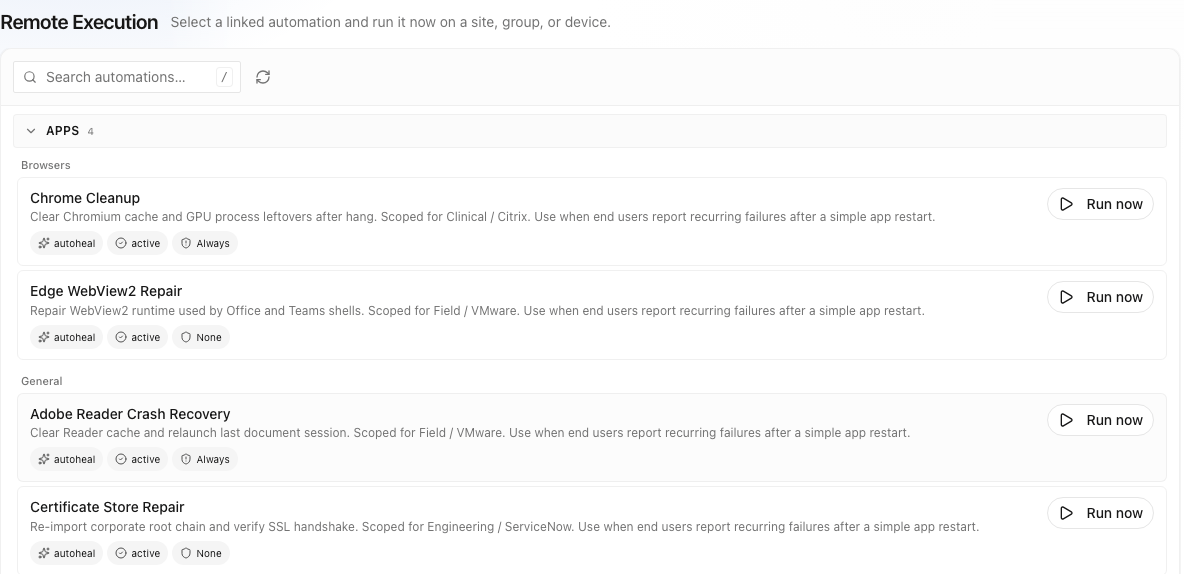
Intelligence, in the product
Haya works out what a problem means on your devices and finds the fix that already exists for it. You approve what runs.
Intelligence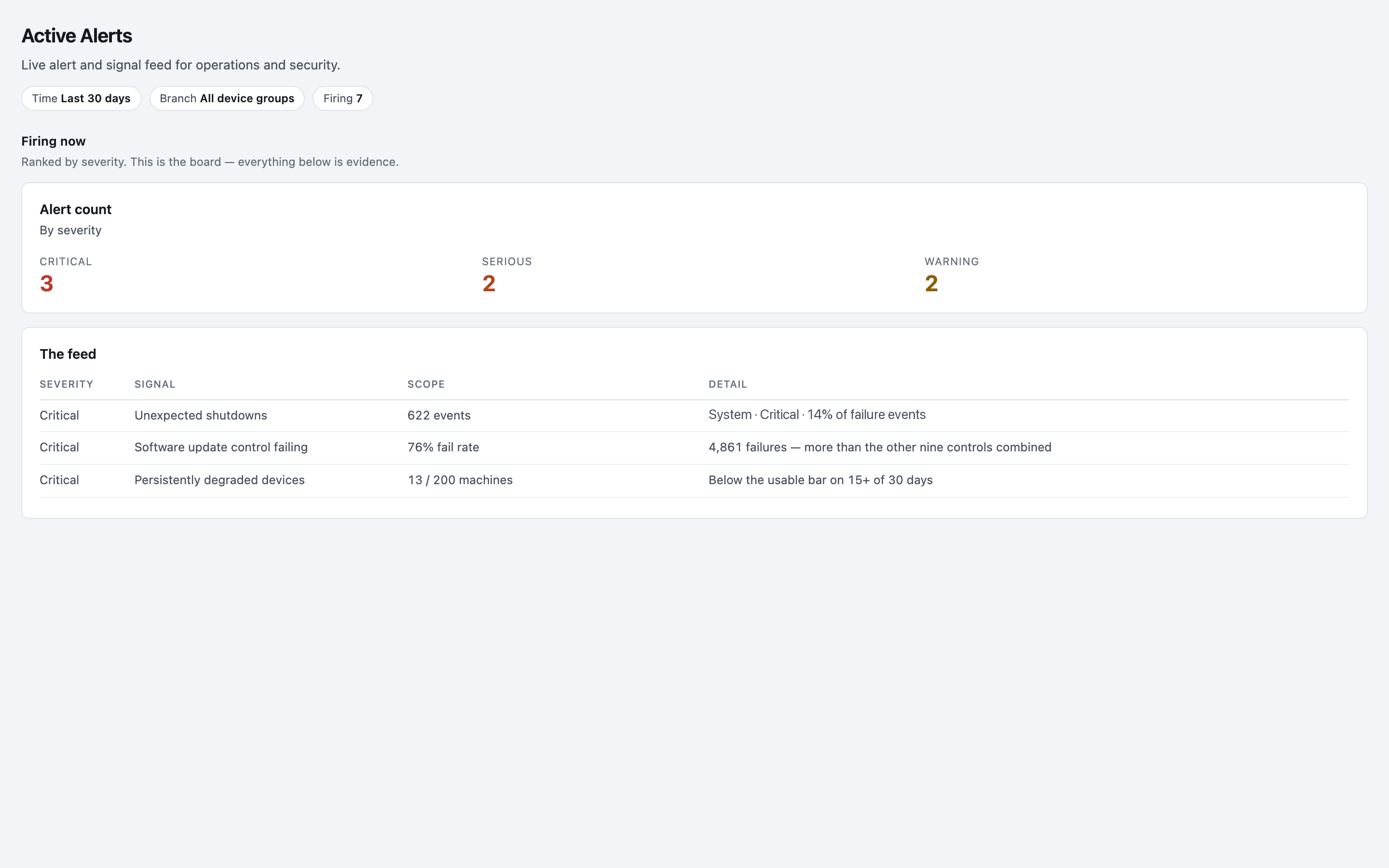
Manage & evolve, in the product
We show you the manual work that is left, ranked by what it would save, and you add the next fix. Then you check the result with the same score you started from.
Manage & evolve
| # | Symptom | Tickets | Hours | Library |
|---|---|---|---|---|
| 1 | Outlook search index rebuild | 412 | 137 | Not yet in library |
| 2 | VPN reconnect loop | 288 | 96 | In library |
| 3 | Teams camera not detected | 203 | 61 | In library |
| 4 | Slow boot after patch | 176 | 88 | Not yet in library |
Per month, ranked from ticket and telemetry data.
Experience, in the product
Device health, applications, network and employee sentiment, measured all the time and rolled into the patented experience score. It shows where work is getting harder and whether a fix made it easier.
Experience
One agent and one library under every stage.
- 1,200+
Automation library
Validated remediations, IT tasks and compliance configurations, ready to switch on.
Trust
Every entry is validated once by a person, versioned, and logged on every run.
Where it runs
Windows and macOS endpoints with the same feature set on both, plus Linux, Android, iOS and VDI. SaaS or on-premises, on a platform that is multi-tenant, with per-tenant branding and licence pools.
Every fix you add keeps running, on every device.
A new fix is settings for actions the agent already has, not a new script. There is no code to maintain as the library grows, and a Windows update doesn’t break it.
So each new problem costs less to cover than the last, and coverage keeps growing.
Why DEX alone isn’t enoughFind the page written for your team.
One agent on every device. Your people step in where judgement is needed, and nowhere else.