

DEX Intelligence
See the slow boots and frozen calls, then fix them.
The insight lands on a dashboard; the fix usually lands in a queue. Haya, Nanoheal’s AI and analytics, watches every laptop all day, from the boot that drags every morning to the video call that freezes. Then the approved fix runs, and the score shows what changed.
66.2DEX score
- 65.1Technology
- 53.8Endpoint
- 76.3Network
- 67.4Sentiment
Score trend
Who is affected
46of 200 machines
below the usable bar this month
What the employee lived with, not what the data centre saw.
Each domain is measured on the device where the employee works, so a slow week in one is comparable with a slow week in another. Scripts have to go looking for a problem. Nanoheal is told.
MeasuredBoot and logon time, CPU, memory, disk, battery and OS events, on Windows and macOS endpoints.
Boot decompositionWhere the minute goes
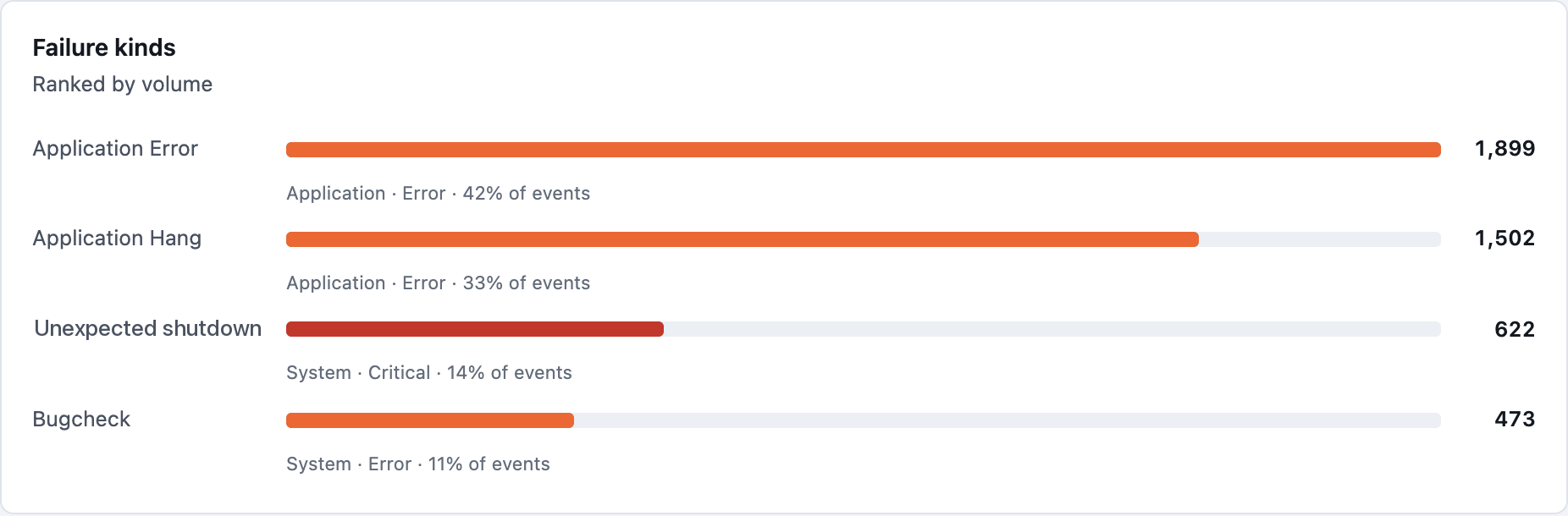
MeasuredApplication use, crashes and hangs, and the software installed on each device, plus licence harvesting for Microsoft 365, Adobe and Zoom.
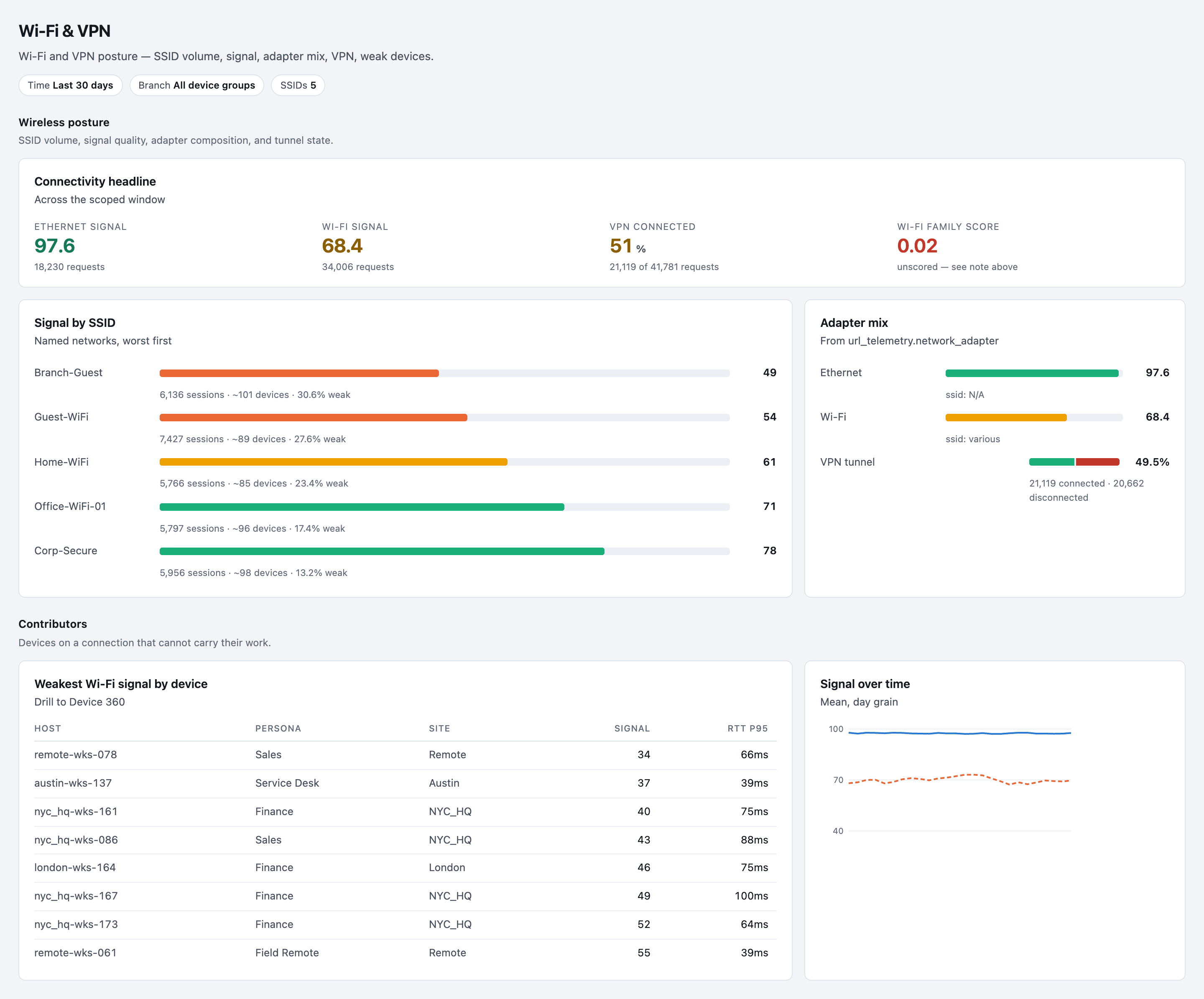
MeasuredTeams call quality, Wi-Fi and VPN, and response time to the web services people use, plus synthetic monitoring for Teams, Outlook and ERP.
MeasuredPulse-survey sentiment, with micro-surveys after an update or a fix.
From a finding to a fix
- All laptops 66.2
- Devices53.8
- Applications53.8
- Network76.3
- Sentiment67.4
One score, four domains
Devices, applications, network and sentiment feed one patented experience score.
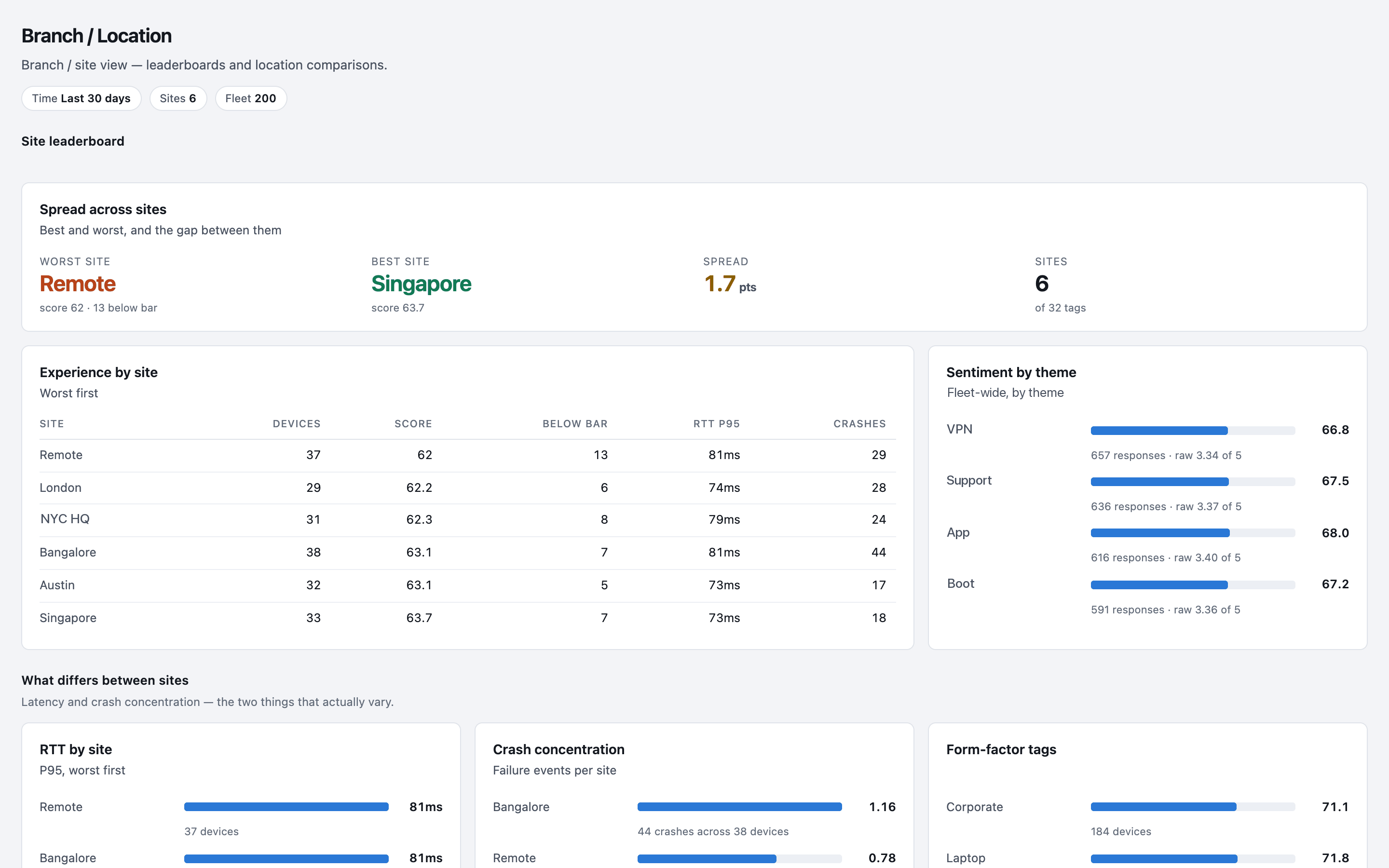
- Remote 62.0By siteworst first
- Remote 62.0
- London 62.2
- NYC HQ 62.3
- Bangalore 63.1
- Austin 63.1
- Singapore 63.7
Laptops below the bar · Remote 13 of 37
Who is affected, and where
See it by device group, business unit and department, and by persona.
- LT-1907 2 min 10 s
2 min 10 s to boot on Friday. Its usual is 48 s.
Its usual range, from its own history
Same climb on 12 more Remote laptops
What is dragging the score
Haya reads the same metrics against each device’s own history. It flags what is abnormal, like a boot that got slower every morning this week, and what is building before it becomes a call. How Haya works.
- Fixed 51 s
- Matched start-up-item-cleanup
- Ran on 13 laptops: 9 start-up items off, security agents kept
- Remote 62.0 → 65.8
Handed to the engine that fixes it
Because Nanoheal runs the fix, it can show what the fix changed.
Dashboards for every level, ready on day one.
Nanoheal ships with dashboards from the leadership summary down to a single device. Haya answers questions on the same definitions, so a number never means two things.
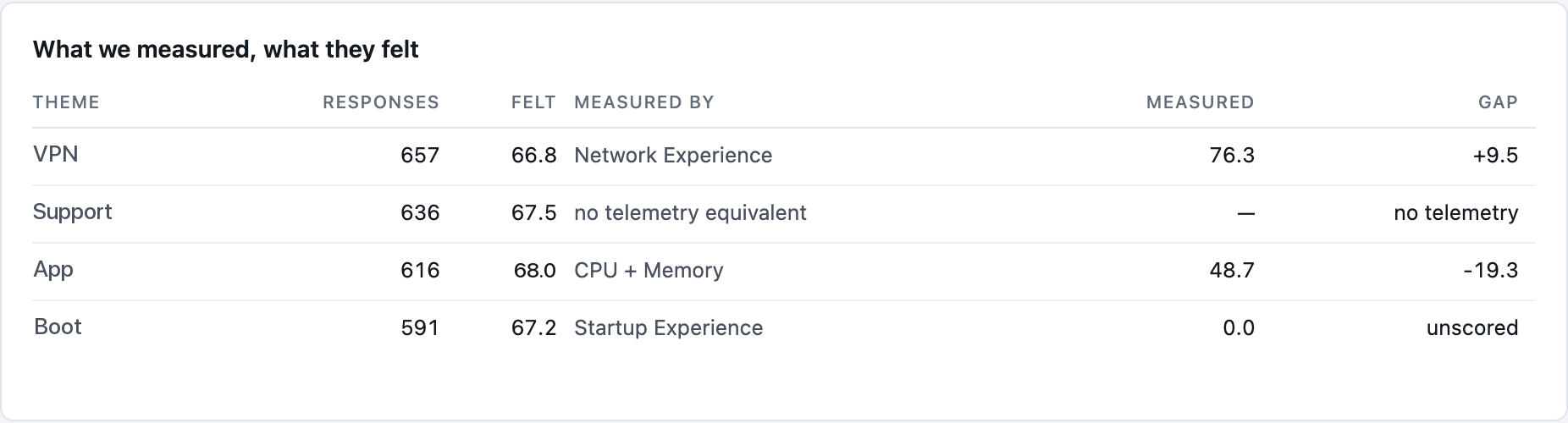
Sentiment sits on the same boards as the telemetry. A device can pass every check and still frustrate the person using it, and putting what people say next to what the device reports shows which problem is real.
One score, on a method you can open.
The patented experience score is built from what happened on each device. You can read the method, tune it and see every change to it, version by version.
How the score worksAsk any DEX tool
- Does a finding come with a fix?
- Yes. The finding leads to the approved fix, which runs on the device, and the score shows what changed.
- Can you read the score’s method?
- Yes. It is patented (US 9,477,573), versioned, and you can tune it per persona.
- Does it measure what people feel, not only the device?
- Yes: pulse-survey sentiment, charted on the same boards as device telemetry.
- Can you ask it a question in plain English?
- Yes. You can ask a question in plain English and get the same number the dashboard shows.
- Does macOS get the same as Windows?
- Yes: Windows and macOS, with the same feature set on both.
Measuring shows where it hurts. The fix is what the employee notices.