

Do more with the team you have.
Your DEX tool probably shows you the problem. Nanoheal also fixes it on the device, with the team you have and no automation engineers to hire.
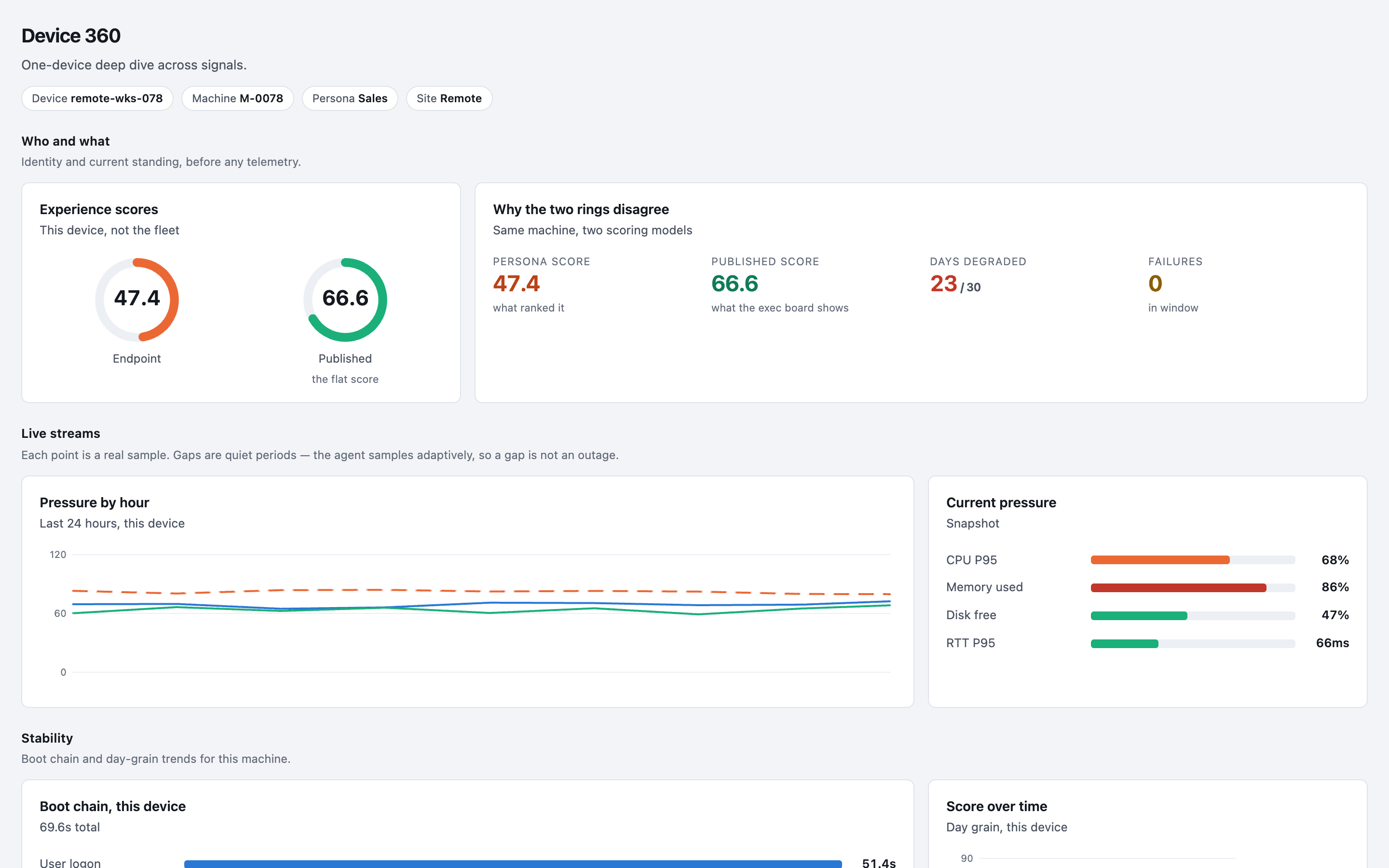
A few repeat faults cost most of the time.
A disk fills, a service will not restart, a policy drifts, and someone cannot work until it is sorted. Your team knows the fix, but still applies it by hand, device by device, every time.
13% of tickets cause 80% of lost productivity.
Each incident costs an employee 3h 18m of productive time.
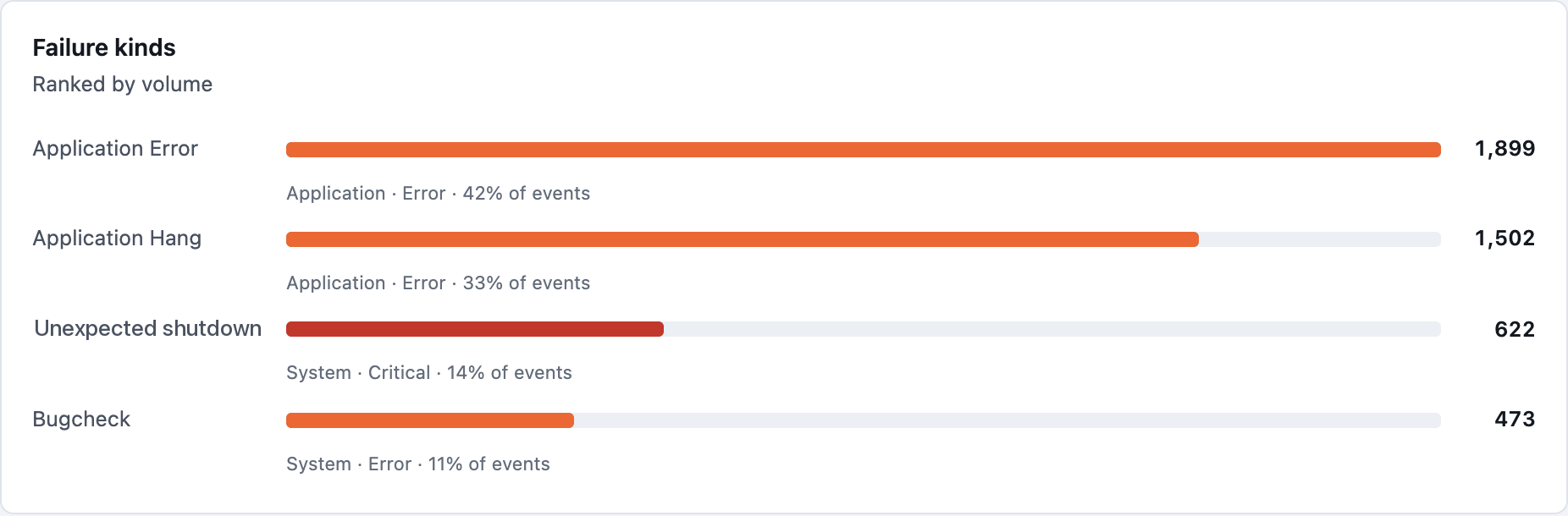
Failure kindsRanked by volume
The platform that measures the fault also fixes it.
Where the faults that devices report end up
Swipe to see the whole week →
Digital employee experience
Devices, applications, network and sentiment on a patented experience score, with dashboards from the leadership summary down to a single device, anomaly detection and forecasting. The score’s method is versioned, so a gain this quarter means the same thing next quarter.
DEX Intelligence
Automate Issues and IT operations
The tested fix runs on the device the moment it reports the fault. Software, patching, policy and the routine requests run on the same engine, so they leave the desk’s list too.
How Automate Issues works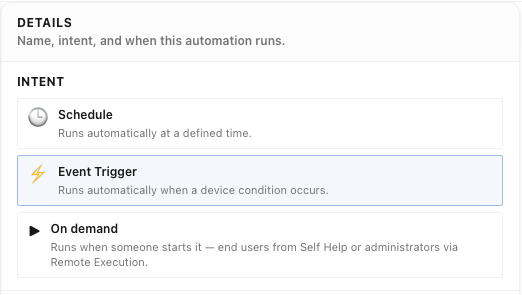
6boards to find the cause: Device 360, Crash & Hang, Persistently Degraded, Active Alerts, Incidents & Automation and Software Inventory
Every problem is counted: resolved by Autoheal, resolved with one click, or still a ticket.
Nanoheal reports success rate, failure breakdown and average duration for every automation.
Your first result is on live devices, in week one.
The automation library’s 1,200+ fixes ship on day one, so we start by matching them to the call drivers you already have.
- Week one
Match the library to the drivers you already have.
We map your ticket categories against the fixes that already exist. What is covered is switched on for a pilot group; the gaps become the first fixes to write.
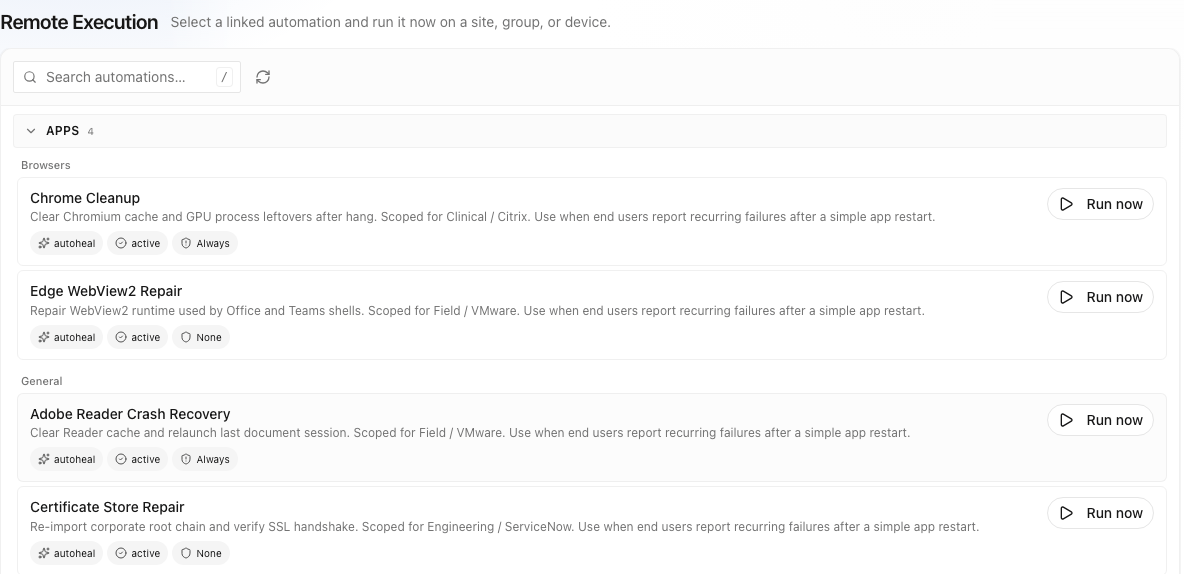
Nanoheal console · Library entries, ready to switch on - First quarter
Autoheal the common cases. Self-service the disruptive ones.
The same fix serves both modes, so the choice is a guardrail set per population, not a second piece of work.
Self-service · On the device NanohealnowOutlook keeps closing. Repairing your mail profile takes about a minute, and your mail stays where it is.
Outlook opens · checked after the fix
On the device · the same fix, offered to the employee - Every quarter after
The long tail, in order of return.
Remaining manual work is ranked by what closing it would be worth, so next quarter’s roadmap comes from your fleet’s data rather than a workshop.
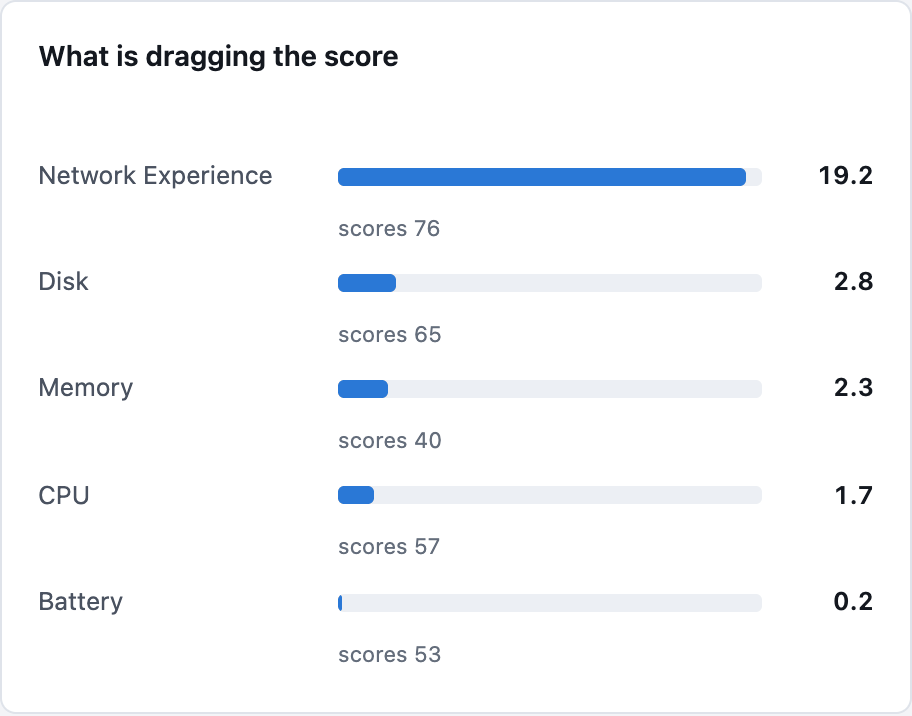
What is dragging the score
Haya analytics · What is dragging the score

See your first result in week one.We map your top call drivers to fixes that already exist, on live devices.
Schedule a demoWhat buyers ask before the first session.
Why do the same call drivers keep coming back?
The same faults come back every week, and each one is fixed by hand. With Nanoheal, the tested fix runs when the device reports the fault, with no one in the loop.
We tried automating this before and it stalled. What’s different?
Usually nobody had time to write the scripts, coverage stopped at the top few call drivers, and the scripts broke after the next Windows update. Here the common fixes are already written, your team adds the rest without code, and a fix is settings for built-in actions, so an update doesn’t break it.
Our DEX tool already shows the problem. What changes?
Today, most of it goes to someone else’s queue. Here, the same platform that measures the problem resolves it on the device, and every resolution is counted.
Do we have to replace our DEX tool?
No. Nanoheal is a full DEX platform in its own right, and it can act on what your current tool finds. Start with resolution and decide about the dashboard at renewal.
Does the AI change our endpoints on its own?
No. Haya, Nanoheal’s AI and analytics, finds the problem and shows the fix; a person approves what runs. How Haya works
How soon does the first call driver resolve on its own?
The automation library’s 1,200+ fixes ship on day one, so we spend week one mapping your top call drivers to fixes that already exist.
What do we report to leadership?
Ticket avoidance per automation, and the experience score before and after. How the experience score works
The same team, fewer repeat tickets, and a score that shows it.