

AI-assisted employee experience
Help that arrives before anyone asks.
Haya, Nanoheal’s AI and analytics, notices when a laptop is struggling. The fix runs quietly or is offered on the screen in plain words, and the employee is asked how it went. IT sees the experience, not only the tickets.
Quietly, offered, or asked for.
The same approved fix reaches the employee in the way that suits it. Who acts is set on the fix, not left to chance.
Quietly
Fixed before they notice.
Autoheal runs the fix on its own. A short note tells the employee afterwards what was fixed.
Offered
One click, in plain words.
When a fix would close an app or restart something, it is offered on the device when the failure happens, with what it will do and how long it takes.
Asked for
An assistant that can fix, not only answer.
The employee describes the problem in their own words, on the laptop, in Teams or in Slack, and the assistant offers the matching fix.
What the device says, and what the employee says.
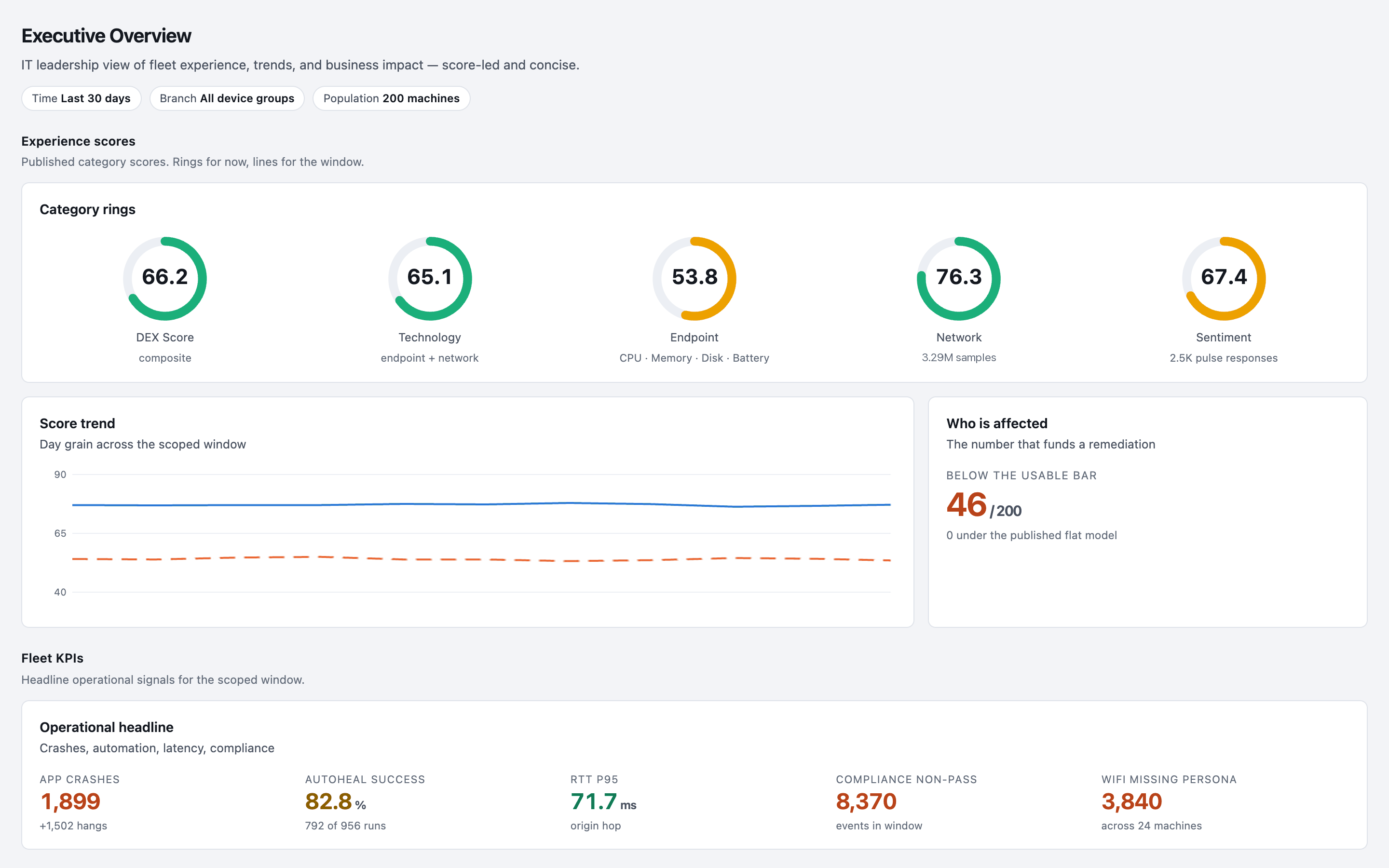
The experience score weighs how the device performs with how people say it feels. Pulse-survey answers are charted on the same boards as the device data, so a fix that worked on paper but not for people shows up. The survey can follow an update or an Autoheal run.
Employees see what was fixed. IT sees the device, not their work.
Nanoheal reads device and experience data, not files, mail or screens. What is collected, who can see it and how long it is kept follow your configuration. How we handle the data.
Help arrives on the laptop in plain words, and the score shows whether it felt like help.