

Gartner® Magic Quadrant™
Included in the 2026 Gartner® Magic Quadrant™ for Digital Employee Experience Management Tools
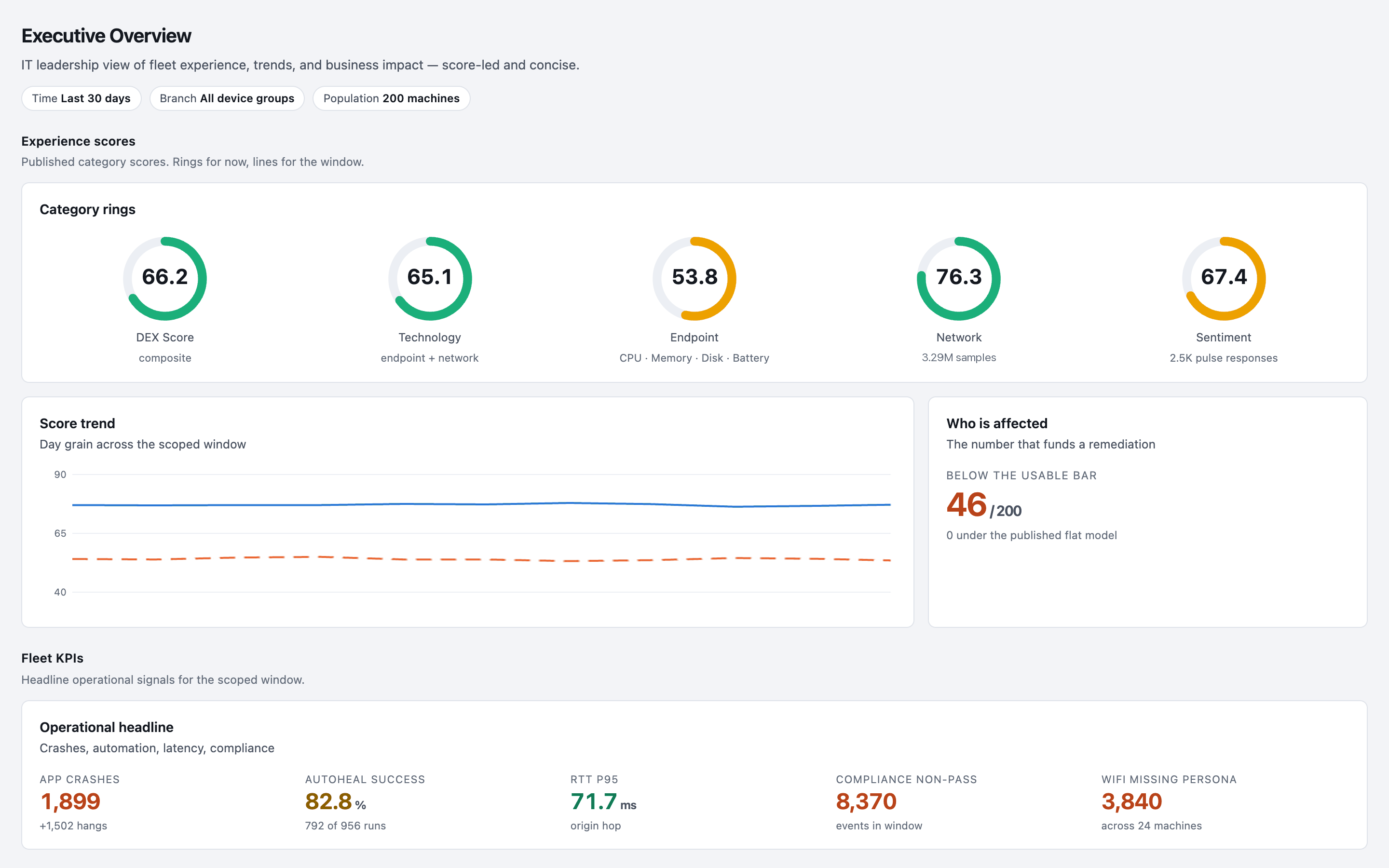
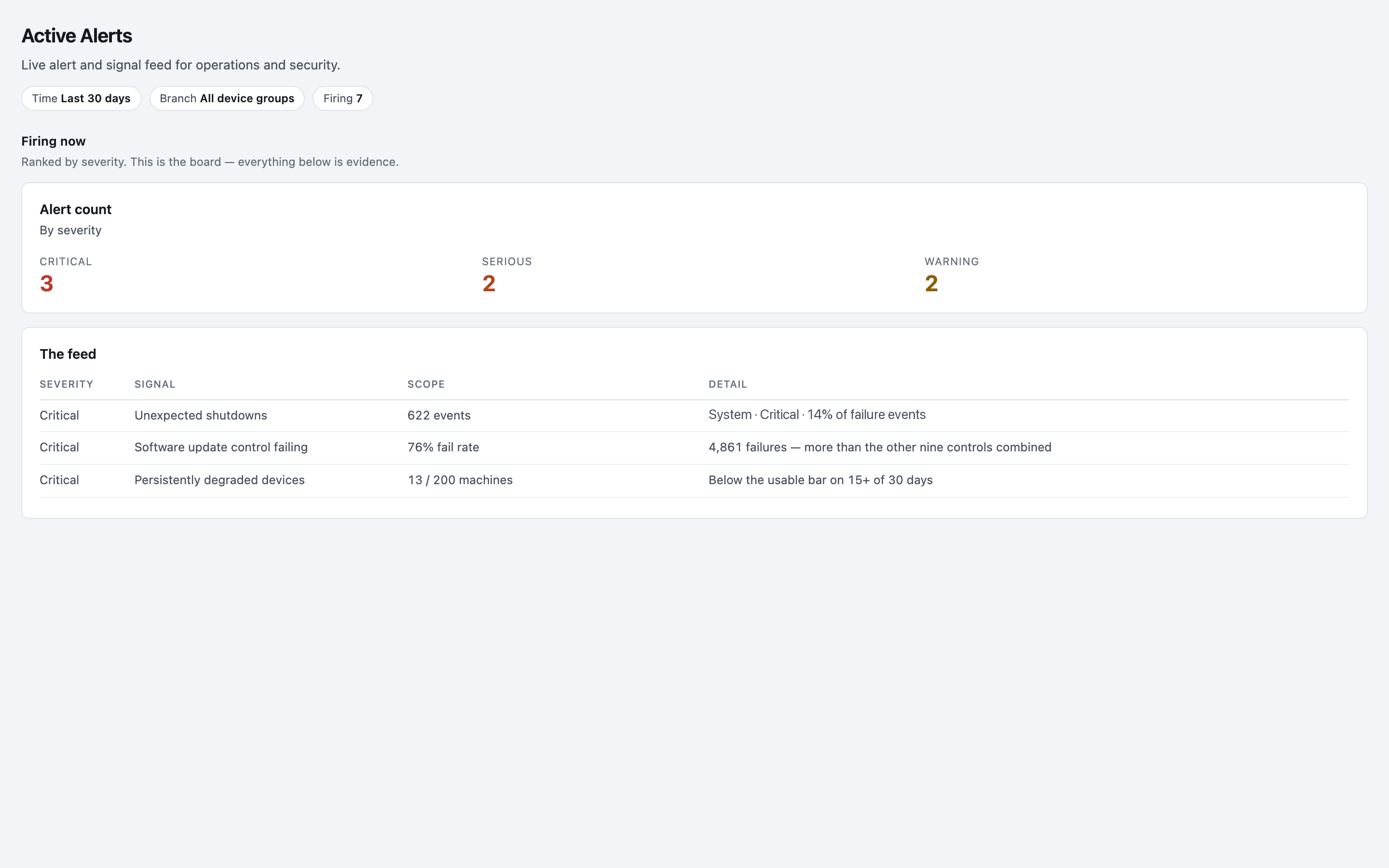
Included in the 2026 edition. What a DEX tool does, in Nanoheal:
Nanoheal is included in the 2026 Gartner® Magic Quadrant™ for Digital Employee Experience Management Tools.In the 2026 Gartner® Magic Quadrant™ for DEX tools. See it on Gartner ↗
The analysts who cover digital employee experience (DEX) evaluate Nanoheal as a DEX platform. The practitioners who deploy it review it afterwards.
Digital Employee Experience Management Tools
Gartner® Magic Quadrant™
Gartner® Peer Insights™
Rising Star, 2026
ISG Provider Lens™
Experience score, US 9,477,573
Patent
Gartner® Magic Quadrant™
Included in the 2026 edition. What a DEX tool does, in Nanoheal:
ISG Provider Lens™
ISG’s evaluation of digital workplace solution providers.
Gartner® Peer Insights™
What customers say
Gartner Peer Insights publishes reviews by verified practitioners. It is customer feedback, not analyst research.
4.6 out of 5 on Gartner Peer Insights
Gartner® Peer Insights™Average rating as of 16 October 2026, in the Digital Employee Experience Management Tools market. Read the reviews on Gartner Peer Insights
Analyst criteria are organised around measurement, because that is where DEX began. Nanoheal covers all of it: measurement, forecasting, anomaly detection and root cause, with a patented score (US 9,477,573) underneath, versioned so it holds still.
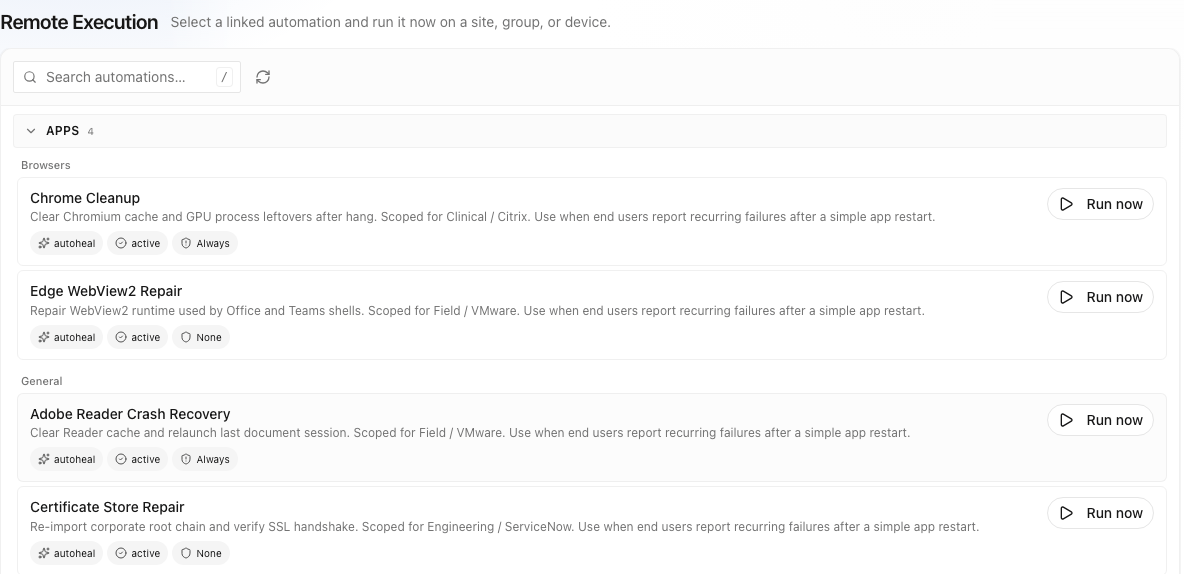
What happens after a finding carries less weight so far: whether the platform resolves it, enforces policy and acts across the surrounding systems on one engine, without shipping code to every endpoint. Gartner now uses autonomous endpoint management (AEM) for that side, and ISG reports that buyers still need AI transparency, approval processes and outcome validation.
Questions to ask in a bake-off
Nanoheal’s answer on AI is a gate: Haya, our AI and analytics, finds the problem and shows the fix; a person approves what runs. The DXA buyer’s checklist